A Good Return to the USA
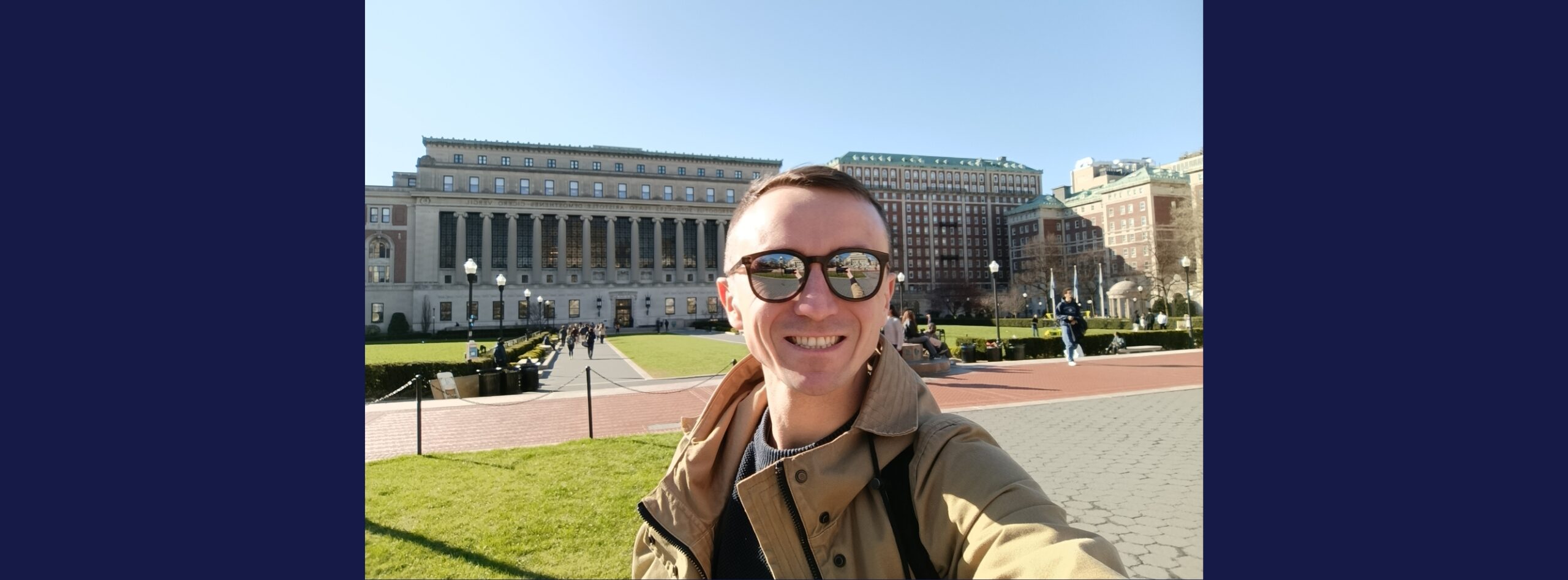
“I am aware that my grant was made possible thanks to the generous contributions of the Kosciuszko Foundation’s donors. I sincerely thank them for supporting Polish science, which has long met global standards.”
– Damian Bębnowski, Ph.D., Exchange to the U.S. grant recipient
Exchange to the US scholarship at Columbia University
I am both a historian and an economist, and this dual academic background is essential for my work in economic history – a rapidly developing interdisciplinary field within the social sciences. Combining the skills of a historian and an economist and integrating the theories and methodologies of both the humanities and social sciences, including qualitative and quantitative approaches, is part of my everyday scholarly practice.
This was not my first research trip to the United States. In 2018, I conducted doctoral research at Columbia University and Harvard University, gathering material for my dissertation on the transformation of the German economy following reunification in 1990. That experience allowed me to immerse myself in the vibrant city of New York and the more “European” atmosphere of Boston. I also participated in the World Economic History Congress at MIT in Cambridge – the most important recurring conference in our discipline. It is at such events that one can meet future Nobel Prize laureates in the economic sciences.
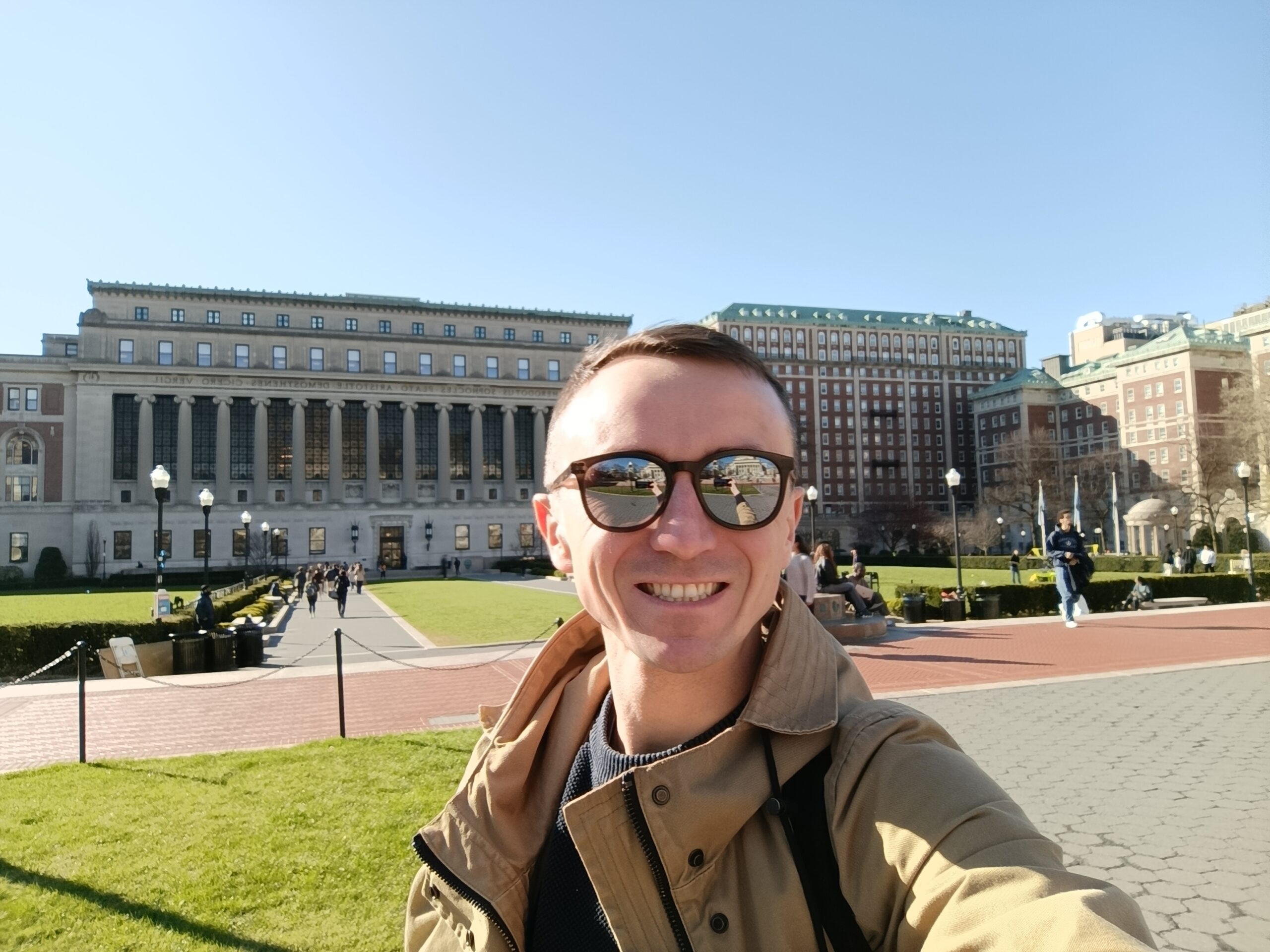
This time, my focus was on exploring the complexity of Polish economic thought. By applying to the Kosciuszko Foundation program, I aimed to return to Columbia, a member of the Ivy League and one of the top American universities. Columbia is home to the Harriman Institute, a leading interdisciplinary research center on Central and Eastern Europe and post-Soviet Asia. I first established contact with Professor Malgorzata Mazurek, whose research encompasses the history of social sciences, socio-economic thought, and social history. Later, I connected with Professor Christopher Caes, a specialist in Slavic Studies, who became my supervisor. Thanks to the Kosciuszko Foundation program, I had the opportunity to work at Columbia as a visiting scholar.
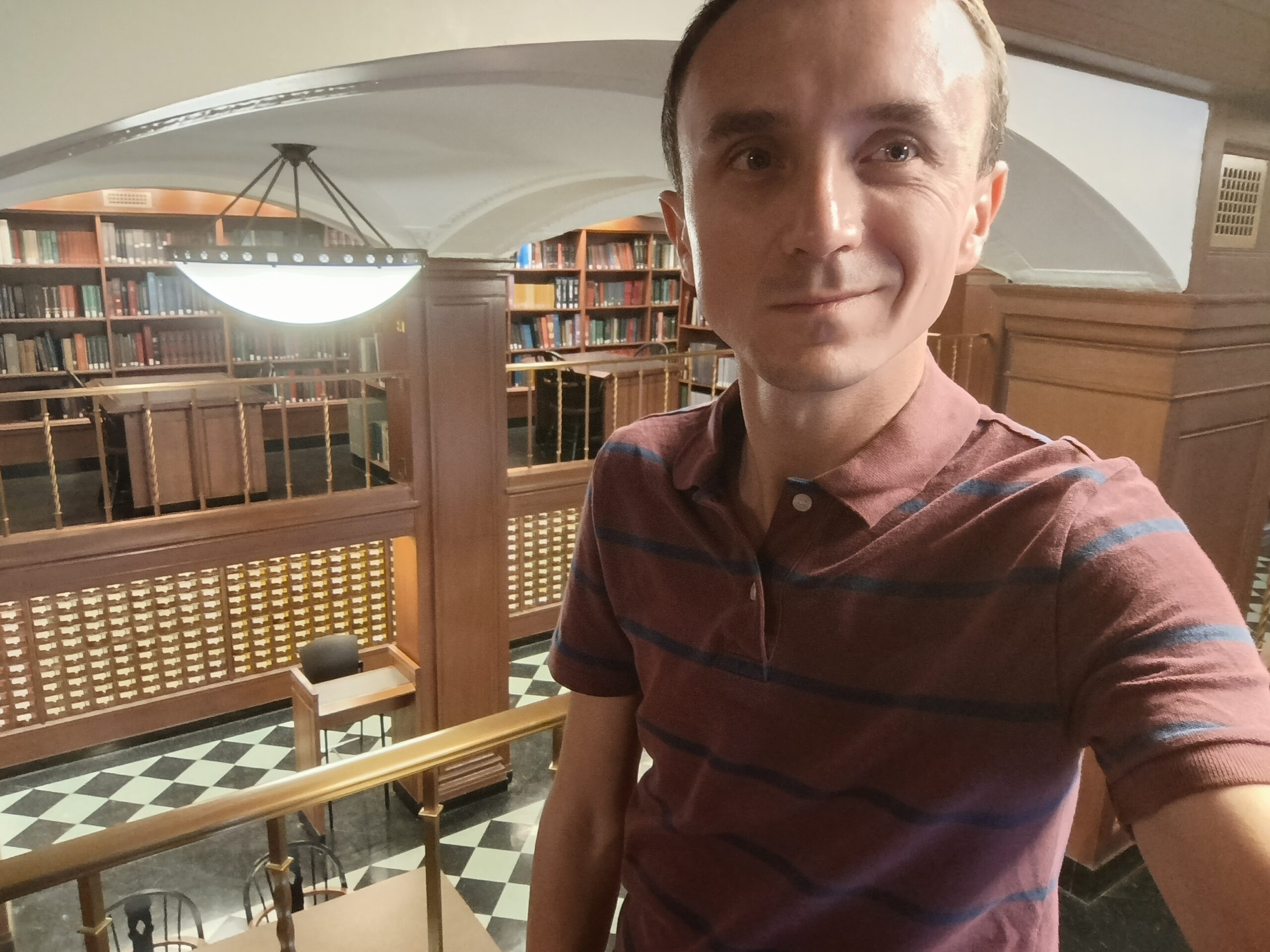
My research project focused on Polish economic thought in the United States during the Cold War. I identified and analyzed the main developmental trends in Polish economics in the U.S. between 1945 and 1989. The materials I gathered and analyzed will help me address key research questions in future studies and publications. I conducted highly productive archival research at the Józef Piłsudski Institute of America and the Polish Institute of Arts & Sciences of America (PIASA), as well as in Columbia’s libraries. I established connections with several scholars interested in my project and initiated collaboration with the Piłsudski Institute to prepare a source edition of a study by Damian S. Wandycz, one of the prominent exiled intellectuals. I was fortunate to consult my findings with other researchers who were eager to assist me, particularly Dr. Iwona Drąg-Korga’s team at the Piłsudski Institute and Iwona Flis from PIASA. I am deeply grateful for their valuable comments and suggestions. I also have fond memories of working with the administrative staff at both the Kosciuszko Foundation and Columbia.
The materials collected during my research and consultations will allow me to develop a detailed intellectual map of key figures, publications, organizational structures, and interrelationships among individual economists. This will help me construct a credible and coherent picture of Polish economics in the United States from 1945 to 1989.
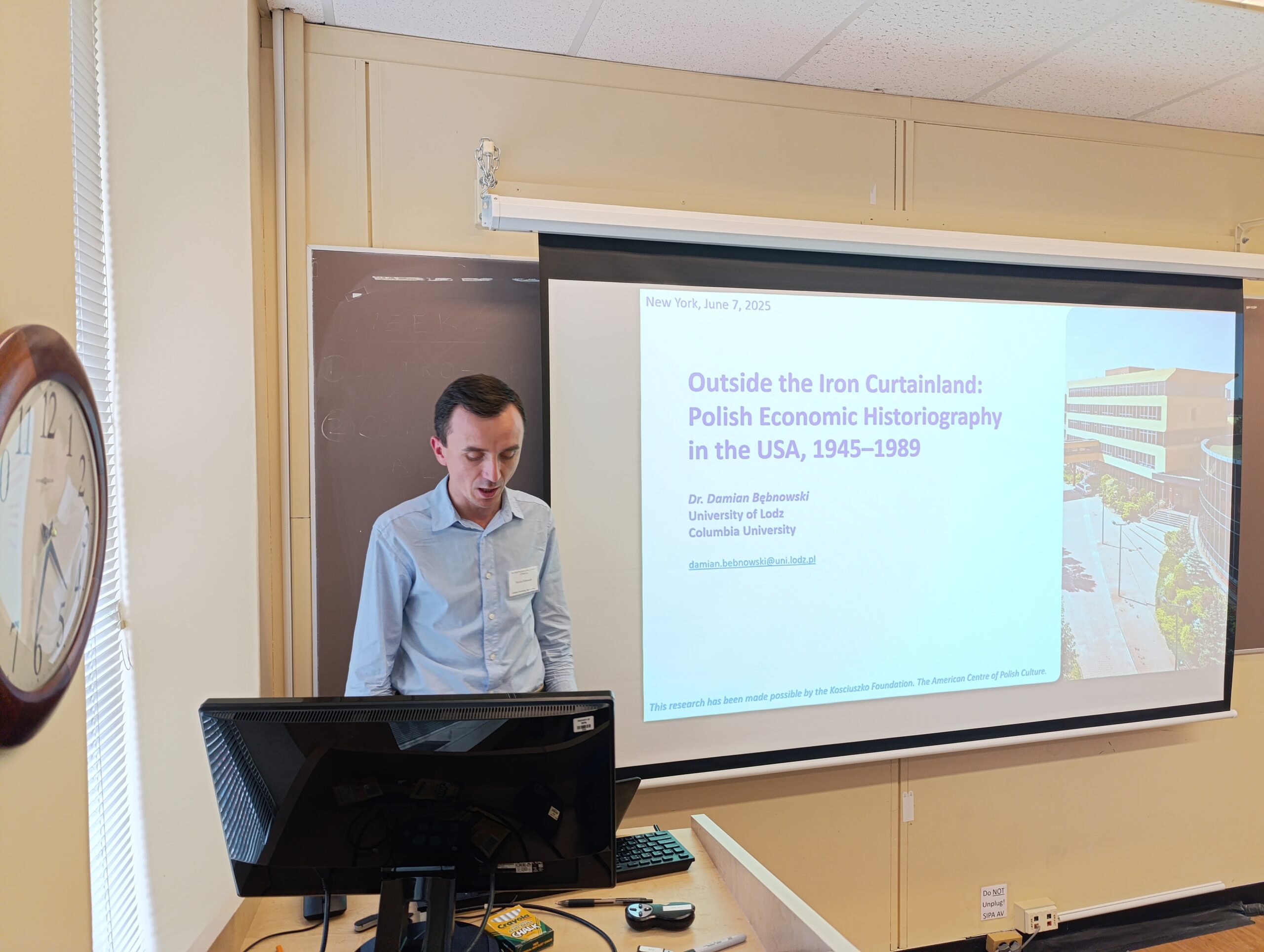
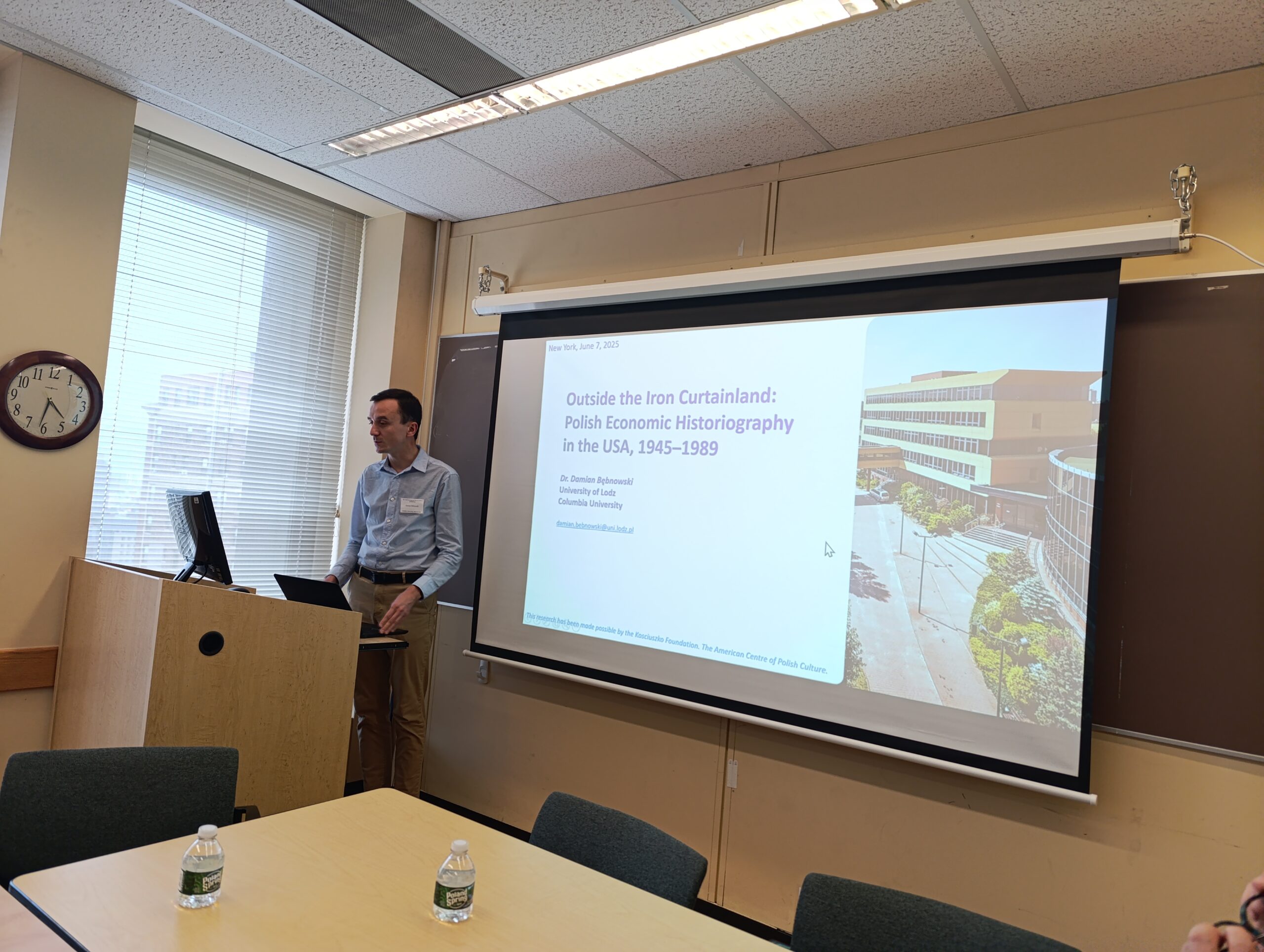
Participating in university life was also crucial. I attended academic events at the Harriman Institute and presented a paper at an international conference at Columbia, co-organized by the Harriman Institute and PIASA (“PIASA Conference on Polish Studies: Democracy and Its Discontents”). My paper was titled “Outside the Iron Curtainland: Polish Economic Historiography in the USA, 1945–1989.” At the invitation of the Piłsudski Institute, I also gave a lecture to the Polish community in New York as part of the project “On Economics beyond Utopia: Polish Economic Historiography in the USA after 1945.” The lecture is available on YouTube. Once again, I realized that Polish scholars have no reason to feel inferior. Polish science has notable achievements that are respected and recognized by American academics, enabling professional and meaningful collaboration.
Being away from my family and homeland was the most difficult part. However, my stay in New York gave me the opportunity to reconnect with other family members and friends. Amidst my numerous professional responsibilities, I managed to visit many iconic places, including Manhattan, Liberty Island, the World Trade Center, Rockefeller Center, Trump Tower, Central Park, St. Patrick’s Cathedral, Greenpoint, Williamsburg, Polish Catholic churches, the Metropolitan Museum of Art, the Morgan Library & Museum, the Museum of the City of New York, the Katyn Memorial in Jersey City, the Polish Consulate in New York, and the headquarters of the Kosciuszko Foundation. During my wife’s visit with our children, we traveled to Florida and visited the Kennedy Space Center Visitor Complex at Cape Canaveral. We will forever cherish the nearly daily views of NASA rocket launches, which we watched from the beach near our apartment in Cocoa Beach.
I am aware that my grant was made possible thanks to the generous contributions of the Kosciuszko Foundation’s donors. I sincerely thank them for supporting Polish science, which has long met global standards. This support should be further strengthened and promoted. American researchers are genuinely interested in the achievements of Polish science, including in my field – economic history. Polish scholars should feel confident and proud.
It was indeed a good return to the USA. I now look forward to becoming actively involved in the KF Alumni community, of which I am proud to be a member.
Learn about Kosciuszko Foundation grants and exchange programs: https://thekf.org/grants-scholarships/
Dr. Damian Bębnowski – historian and economist. Assistant professor at the Department of History of Economics, University of Lodz. Visiting scholar at Columbia University (2025). Vice President of the Board of the Janusz Kurtyka Foundation in Warsaw. His book “The Importance of Constitutional Rules and Property Rights: The German Economy in 1990–2015” (Berlin: Peter Lang Verlag, 2022) was distinguished by the Polish Association of Economic History in the Franciszek Bujak Award Competition (2024). He has conducted research in the USA (Columbia, Harvard) and Germany (JLU Giessen, Humboldt, Regensburg, RUB Bochum). Kosciuszko Foundation scholarship recipient (2024–25). Lecturer at Zhengzhou University, China (2021–22).
What's New?