Hubert Baniecki and Michal Nauman awarded with the 2026 Witold Lipski Prizes in applied computer science
2026 Witold Lipski Prize: Two Ex Aequo Awards for Cutting-Edge Artificial Intelligence Research
In October 2026, the Witold Lipski Prize was awarded to two young scientists for their achievements in computer science.
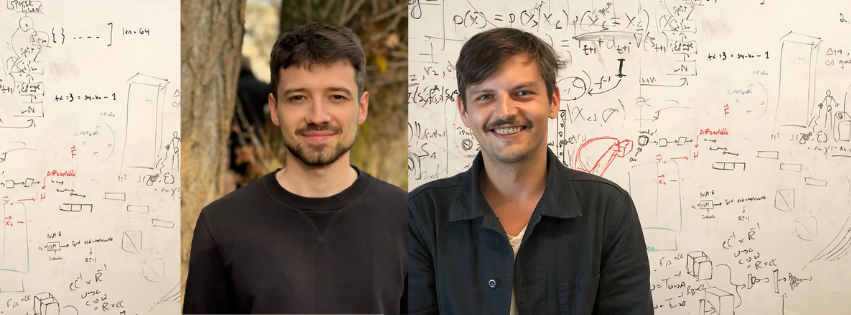
This year, two equal first prizes of PLN 25,000 were awarded in the applied computer science category to Hubert Baniecki and Michał Nauman. An honorable mention, without a monetary award, was given to Dr. Eng. Kamil Deja. No prize was awarded in the theoretical computer science category.
The competition is organized by the IDEAS Research Institute, which focuses on artificial intelligence and digital security, and is funded by the Kosciuszko Foundation.
“This year, the Witold Lipski Prize was awarded for the twenty-second time. The candidates demonstrated a very high level of research, making the selection process a real challenge for both the prize council and the jury. Notably, most of the submitted candidates worked in applied computer science, reflecting the current direction of cutting-edge research in artificial intelligence,” said Dr. Grażyna Żebrowska, coordinator of the Witold Lipski Prize since 2024 and Director for International Cooperation at IDEAS.
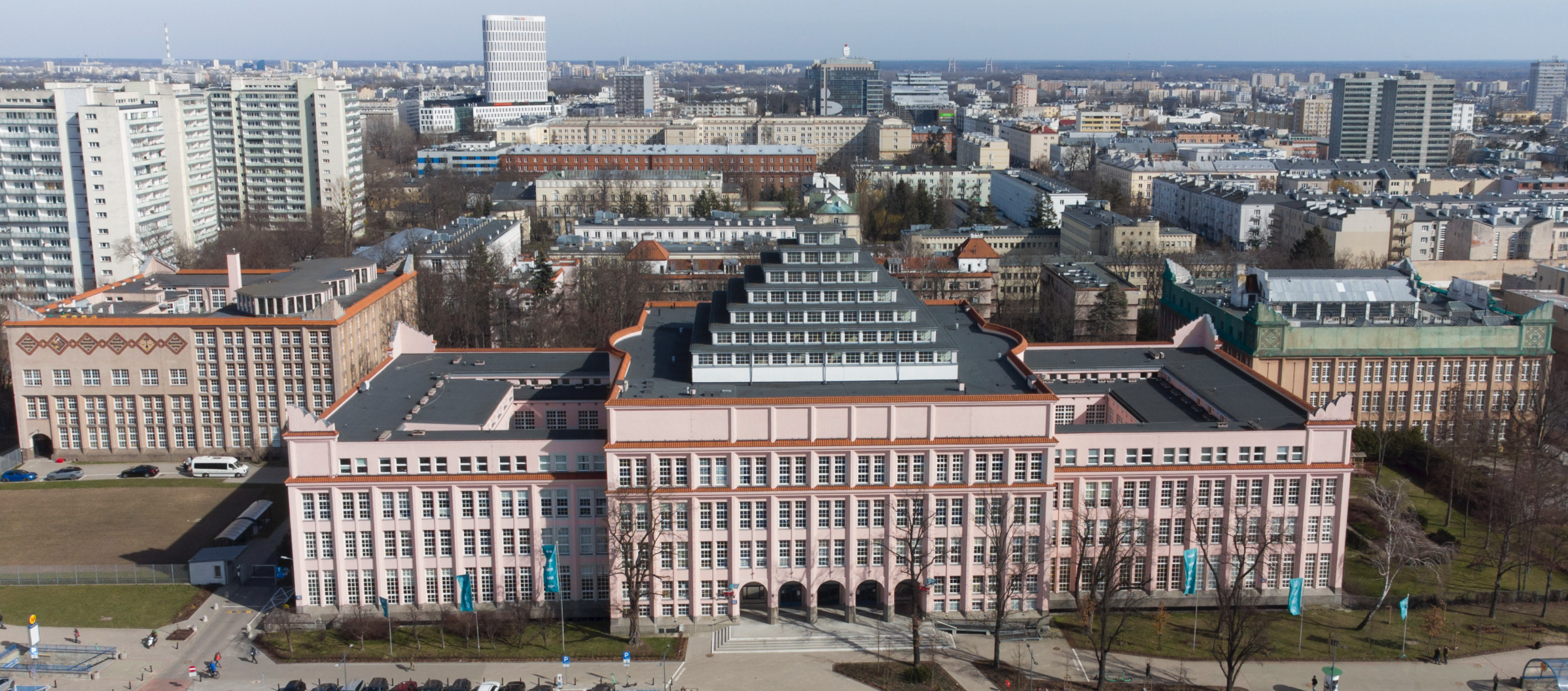
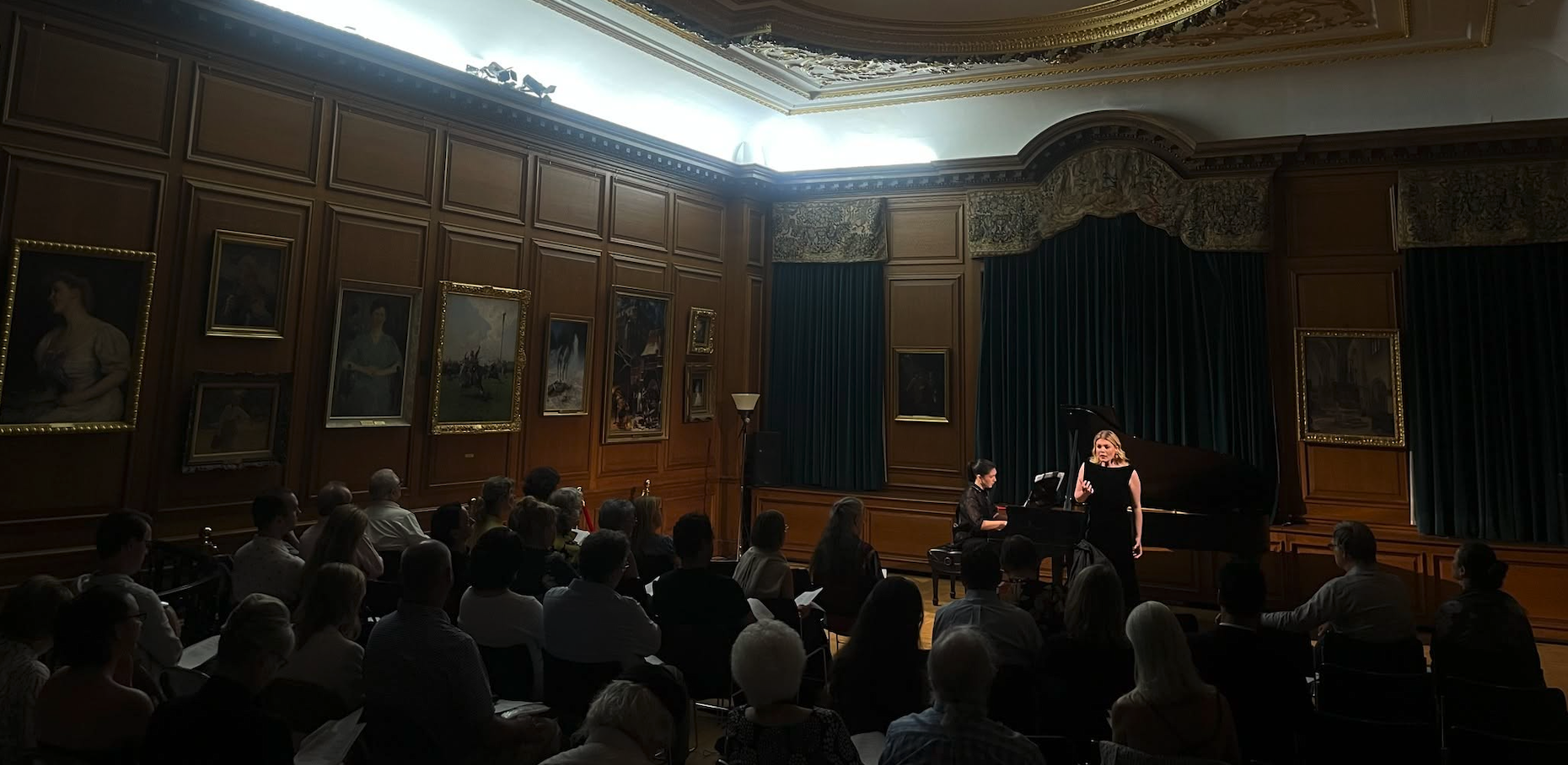
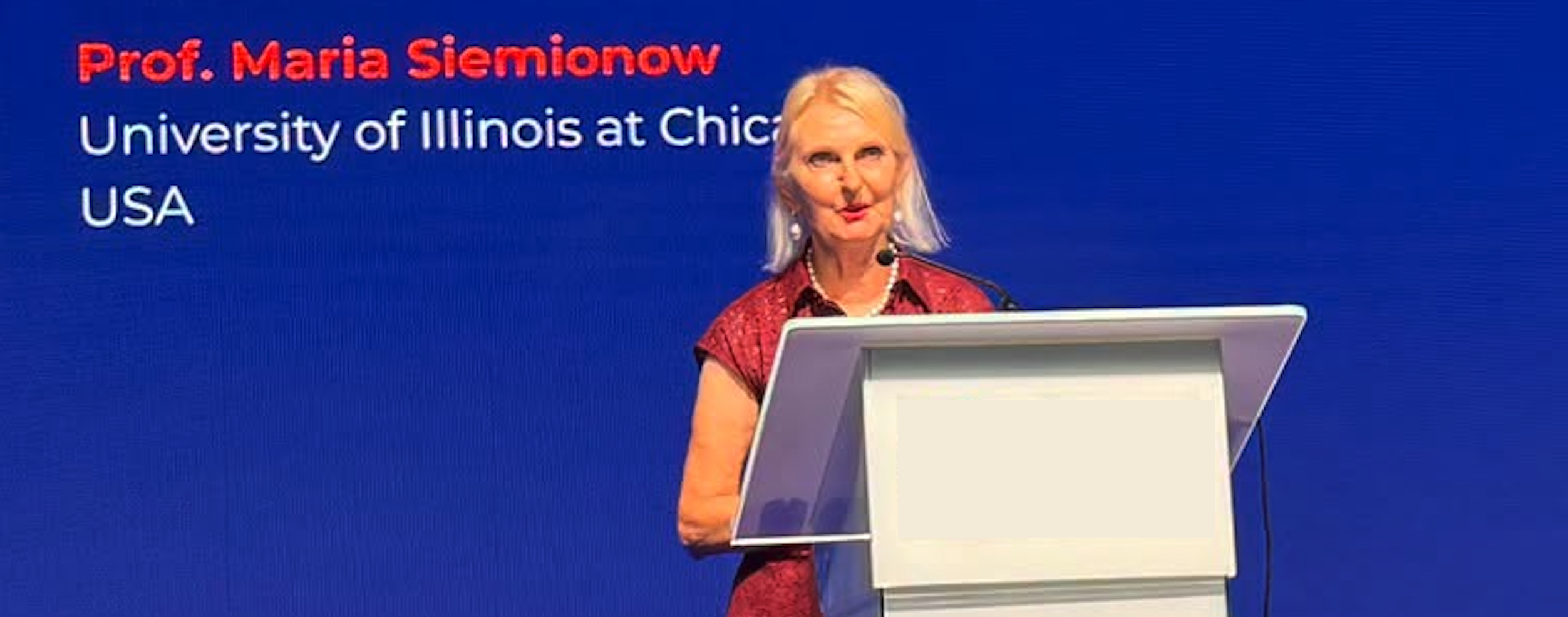
The awards were presented on October 9 during the MLinPL conference at the Copernicus Science Centre in Warsaw, with Krzysztof Gawkowski, Deputy Prime Minister and Minister of Digital Affairs, as the guest of honor.
2026 Lipski Award Laureates
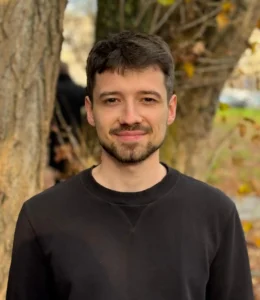
Hubert Baniecki is a PhD student in the Faculty of Mathematics, Informatics and Mechanics at the University of Warsaw and a research assistant at the Center for Credible Artificial Intelligence at the Warsaw University of Technology. He has completed research internships at Meta in New York and at LMU Munich in Germany.
His research focuses on interpretable machine learning, also known as explainable artificial intelligence. He develops algorithms and tools that help researchers better understand how predictive models, including deep neural networks, work. In particular, he studies efficient methods for generating explanations and their use in medicine.
His research has been published at NeurIPS, ICML, and ICLR, as well as in the Journal of Machine Learning Research(JMLR) and PNAS. He has received the FNP START scholarship, a scholarship from the Polish Ministry of Science and Higher Education, the Pearls of Science grant, and the John M. Chambers Statistical Software Award.
“My research focuses on explainable artificial intelligence. I develop methods that help us understand how machine learning models work. In medicine, these explanations can help assess whether a model connects a patient’s test results with disease risk in a way that is consistent with medical knowledge. They can also reveal previously unknown patterns in data and support scientific research.
Our methods for interactive model analysis show how individual patient test results affect a model’s assessment of disease risk and how the model responds when those results change. We have made these methods available as open-source software through DALEX, which is used to study models in fields ranging from medicine and ecology to computer network security.
Recently, I have been particularly interested in explaining multimodal models based on the transformer architecture. These models combine visual and language information and are used in many modern AI systems. We study how groups of input tokens — small pieces of text or images — jointly affect a model’s output, and how their meaning changes depending on context.
To analyze these interactions, we use Shapley values and other tools from game theory, which provide a mathematical basis for the explanations. Our algorithms can, for example, connect concepts describing objects and their features with the corresponding parts of a generated image. In the future, I would like to use these methods to improve the training of language models.”
Michał Nauman is an AI researcher specializing in reinforcement learning. He studied at the University of Warsaw and the University of Amsterdam and completed a research internship at the University of California, Berkeley.
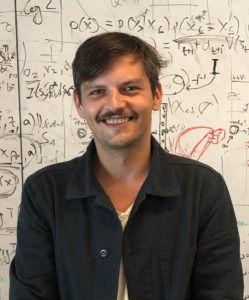
His work has been published and recognized at major AI conferences, including ICML, NeurIPS, and ICLR. His research focuses on methods that allow AI systems to learn through experience and by making decisions on their own.
Reinforcement learning is an area of AI in which a system learns through its own actions. Instead of simply learning patterns from a fixed training dataset, the system makes decisions, observes what happens as a result, and gradually improves its behavior.
Michał’s research focuses in particular on scaling reinforcement learning. Scaling means training larger models with more data and computing power. This approach has contributed to major advances in AI in recent years, including systems such as ChatGPT and Claude.
Applying the same approach to reinforcement learning is more difficult because the data is not available as a ready-made dataset. The system has to generate its own data by interacting with its environment and learning from its mistakes.
Michał’s work looks at how to design algorithms that can make use of large models and experience collected across many different tasks. The longer-term goal is to develop more general AI systems that can learn not only from examples provided by people, but also from their own actions and experience.
Kamil Deja is an Assistant Professor at the Warsaw University of Technology and GenAI Team Leader at the IDEAS Research Institute, specializing in generative AI. His research focuses on diffusion models—the technology behind modern image, music, and video generation, with applications in materials, molecules, and biological structures.
He publishes at leading AI conferences, including NeurIPS, ICML, ICLR, CVPR, and ICCV, and has conducted research at Amazon Alexa, Vrije Universiteit Amsterdam, Sapienza University of Rome, and CERN. He is also a member of the ELLIS Society, a European network of leading AI researchers.
Dr. Deja studies how generative models work internally—how they store knowledge, make decisions, and how their behavior can be controlled without retraining from scratch. His research shows that model knowledge is highly organized and localized: specific skills can depend on less than 1% of model parameters, while certain behaviors are controlled by a small number of network layers.
His team translates these findings into practical tools for removing unwanted content, reducing bias, and improving specific model capabilities—without costly retraining or compromising performance across applications such as image, video, music, and protein generation.
About the Witold Lipski Prize
Witold Lipski (1949-1985) was an outstanding Polish computer scientist. In his short research career, he published several significant works in database theory and algorithm analysis. He also published two books: ”Combinatorics for Programmers” and ”Combinatorial Analysis”. He collaborated, among others, with outstanding computer scientists such as Christos Papadimitriou and Frank Preparata, an exceptional feat during the communist era. He was also the PhD advisor of Tomasz Imieliński (Rutgers University, USA) and Zbigniew Michalewicz (Adelaide University, Australia).
The Witold Lipski Prize honors the memory of one of the pioneers of Polish computer science. It recognizes young researchers for significant achievements in computer science and aims to support the next generation of researchers.
“As the coordinator of the competition, I could not imagine better partners for such an important and prestigious initiative for Polish computer science. The achievements of the prize winners speak for themselves: thanks to researchers like them, Polish computer science continues to have a strong presence among the leading research communities worldwide,” said Dr. Grażyna Żebrowska.