Century of Impact: Culture, Community and Continuity
“So the gifts of the Kosciuszko Foundation’s summer program have resonated through the past half century in my own professional and personal life and continue to resonate in the younger generations of my family.”
– Jane Deren (Clay), Ph.D., 1972 KF Summer Studies Abroad Recipient.
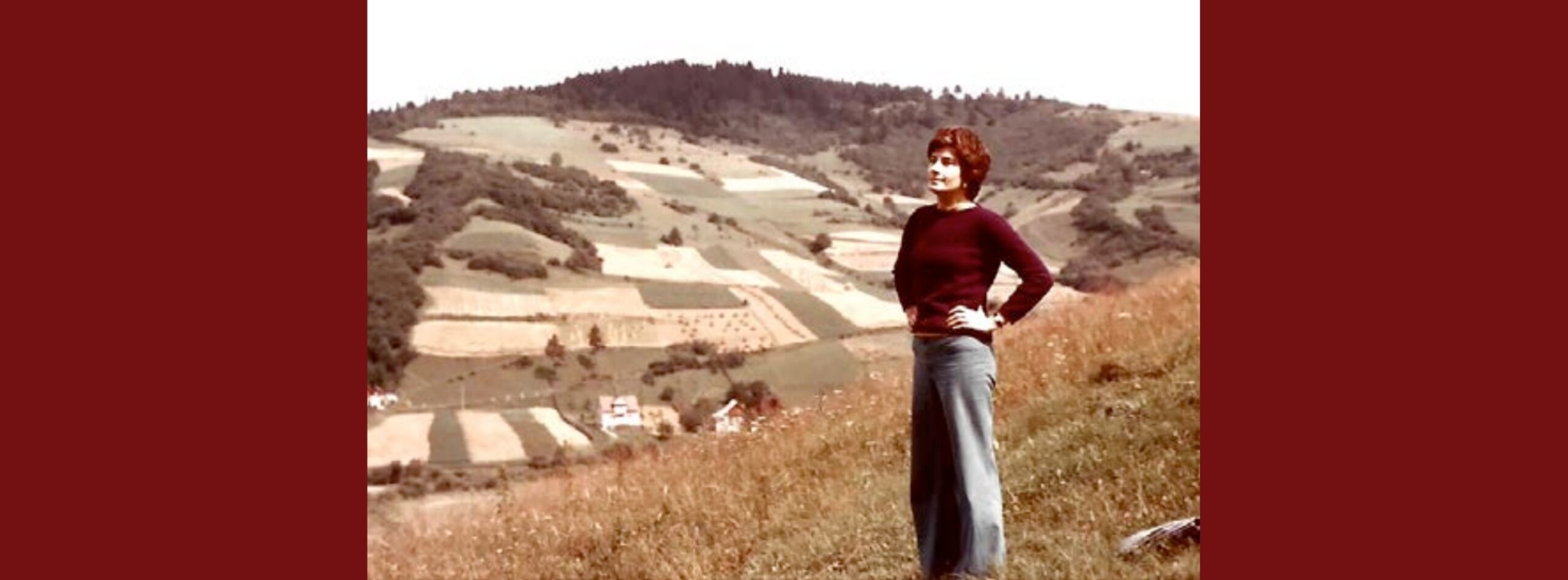
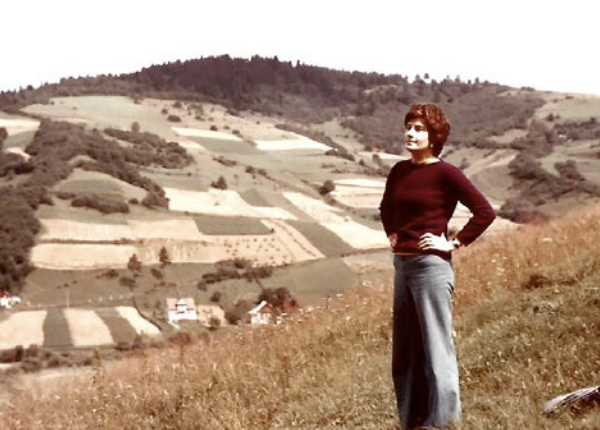
In a photo from 1972, a young woman looks over the rolling green hills outside of Krakow. I was a graduate student then, on a summer program sponsored by the Kosciuszko Foundation (KF). Over a half a century later, I returned to Krakow in December 2024 to share with my adult daughter the land and the cultural riches I encountered that summer long ago. The experiences and the friendships I made during the 1972 Kosciuszko Foundation summer program have helped shaped my life for decades.
Culture and Community
From the 2024 Christmas Market in Krakow, I bought home Oplatki for the Wigilia celebrations I have continued for the younger members of my family so they may taste the richness of our Polish traditions. I also bought Oplatki for another alumna of the ’72 KF program, Barbara Klaczynska (Schmidt), Ph.D., who has been a close personal friend and professional colleague since we met that summer. As I was writing this, Barbara reminisced with me about the classes we took, the challenge to learn the complexities and the elegance of the Polish language, the historical sites we visited, the boat trip on the Dunajec river, the trip to the mountains in Zakopana, the happy times spent in the Ryneck coffee houses with our program mates.
In the decades after our 1972 KF summer program, I kept in touch with the extended Polonia community that formed that summer. They included Andy Rudzinski from Greenpoint in NYC who recently passed away, but I recently shared photos and memories from that summer with his son. Before I wrote this reflection, I contacted my KF summer program roommate from Montreal, Monique Gradek (whom I later visited in Montreal several times, where she is a painter), and her brother, John Gradek, now a business man who was known as a very good Polish dancer during the 1972 KF program. I remember visiting NYC to visit other program participants, Gershon Hundredt and his wife Ruth, when Gershon was finishing his Ph.D. at Columbia University; much later I saw them again in Montreal, where Gershon taught Polish Jewish History at McGill University. Another participant from Columbia, Gershon Bacon, with his wife Brenda Bacon, shared their family history as the ’72 group visited Auschwitz; later that day I shared in their celebration of the Sabbath with singing and joy at the rebirth of the Jewish community in Krakow. (Gershon and Brenda both went on to complete doctorates and eventually taught in Israel.) I also kept in touch with our Polish program liaison, Anna Sarkowicz; when her husband was posted at the Polish Embassy in Chicago in the mid-1980s, Anna, her husband and her daughter came to visit my family in the DC area before they went on to Chicago. (Later Anna’s husband became the Polish ambassador to Australia and Anna played a key role in the diplomatic activities there.)
Continuity
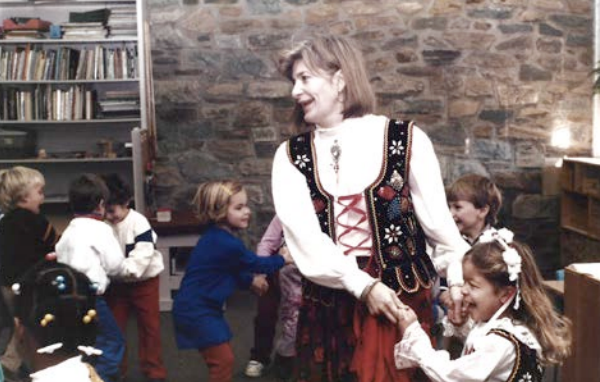
As I write this in my study, I see on the shelf a copy of my doctoral dissertation, which includes a section on Roman Ingarden, an eminent Polish philosopher who wrote extensively about how we experience works of art, music and literature. During that summer in Krakow, I was able to meet and confer with Dr. Janina Makota, who studied under Ingarden and wrote many scholarly articles about him. She generously gave of her time to answer my many questions on Ingarden’s work. I continued to correspond with Dr. Makota for decades before her death. During my long career, I shared my knowledge of Polish culture and of Polish and Polish- American history on many occasions during my professional life as an educator on the secondary and university levels; as a director of several National Endowment for the Arts and the U.S. Department of Education project; and as a director of educational outreach for Jesuit networks here and overseas. For my daughter’s school community, I developed a celebration of Polish culture at the Sidwell Friends School in DC, in 1986; the photo of us dancing at this celebration captures that happy experience. In my retirement, the pride in my Polish heritage that was enkindled during the 1972 KF program led me to more deeply research my Polish ancestors. During 2024 I finally finished a family tree and booklets with photos and documents of our Polish ancestors for my family members, including nieces, nephews, cousins for their children and grandchildren. I was able to identify the birthplaces in Poland of my father, his parents and grandparents, and my mother’s family going back to 1820. More research on our ancestors is waiting to be done in Poland, and some of the younger family members are eager to continue this research.
Gratitude and Celebration
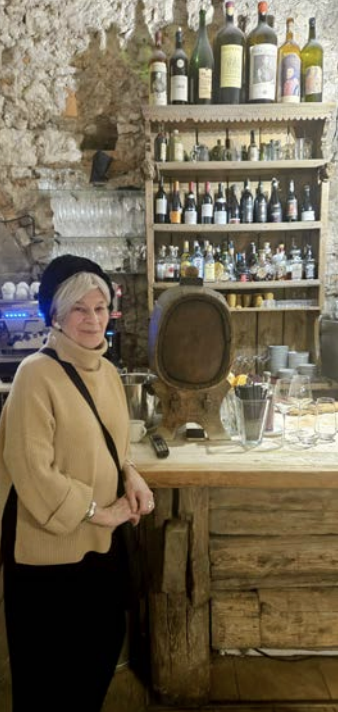
So the gifts of the Kosciusko Foundation’s summer program have resonated through the past half century in my own professional and personal life and continue to resonate in the younger generations of my family. These gifts have made me deeply grateful for that opportunity in 1972 to study in Krakow and create memories for a lifetime. The final photo of me in December 2024 is at the Pod Aniolami restaurant in Krakow before for my birthday celebration with my daughter and friends, reflecting on the journey that started over 50 years ago and had brought me back to Poland.
What's New?